
The Dead
The last act of death is not mortality but the erasure of memory.

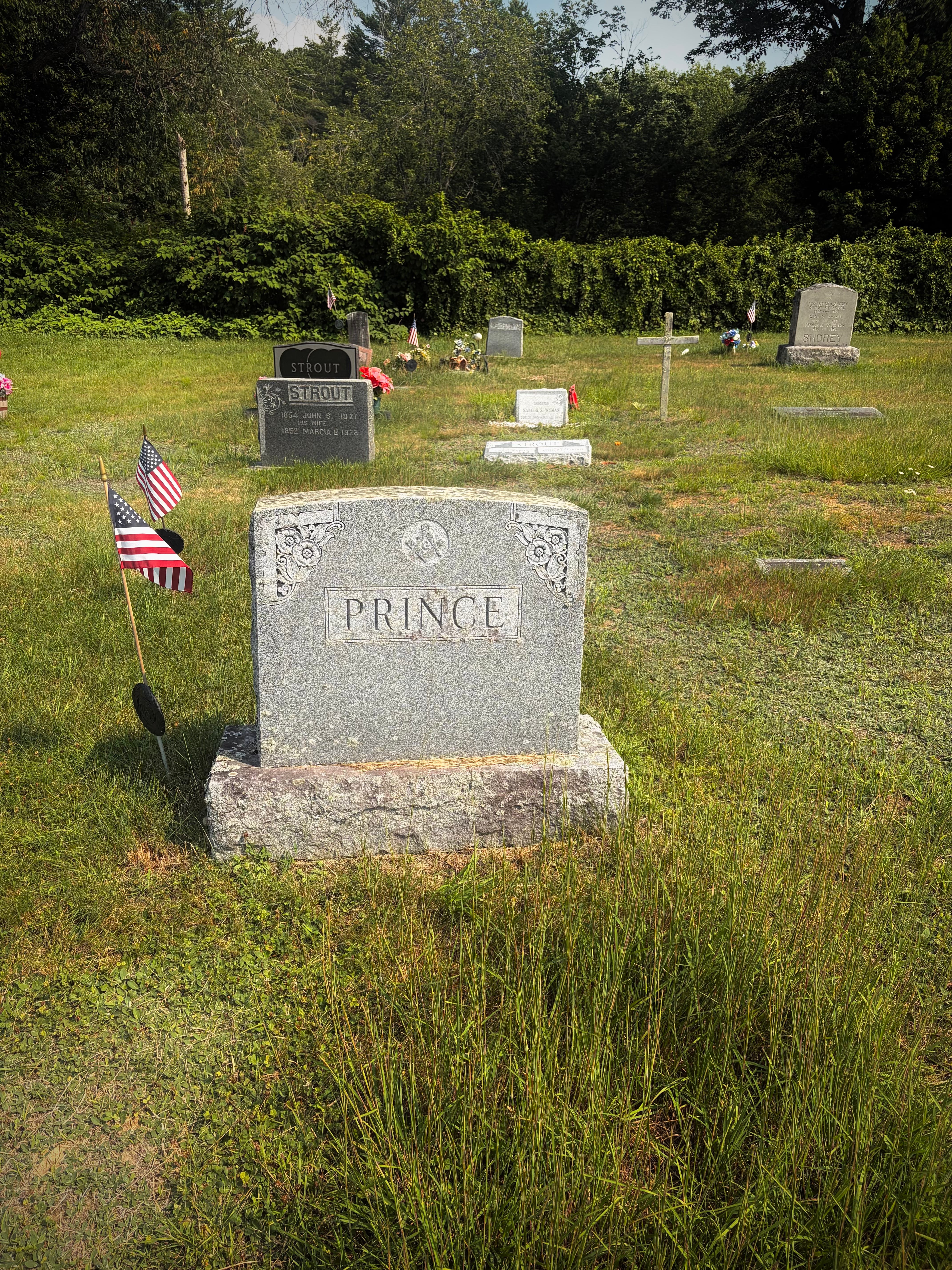
MECHANIC FALLS, Maine — I am standing in Maple Grove Cemetery in Mechanic Falls, Maine. In front of me, within a radius of a few feet, are three rectangular granite headstones that read “HEDGES,” “BLAIR” and “PRINCE.”
Before me lie the remains of my parents, grandparents, two uncles and my aunt. The grass is parched and yellowed. There are small American flags placed in round metal holders, slightly askew, next to each gravestone.
All of the men were World War II veterans. My father was an Army sergeant in North Africa and the Middle East. Uncle Ellsworth was in the Merchant Marine and went back and forth in the North Atlantic convoys. Uncle Morris fought on Guadalcanal in the Solomon Islands and Luzon in the Philippines, where he was wounded. My grandfather, Philip Prince, an Army master sergeant, trained troops in Texas.
Besides being identified as veterans, there is little information available from these plots, although my father is named as the Rev. Thomas Hedges. The women, including my mother, who was an English professor, have almost nothing to identify them. Their names. Their dates of birth and death.
Patriarchy rules, even in death.
Service to the war machine of the state confers the ultimate status, especially in small, rural towns, although my father and Uncle Morris loathed war and the military. Uncle Morris returned from the South Pacific and drank himself to death as he struggled with physical and emotional wounds. My father, unlike my other relatives, refused to have a gun in the house. He became a pacifist after the war and an anti-war activist during the war on Vietnam. He told me as a boy that if the Vietnam War was still being fought when I was 18, and if I was drafted, he would go to prison with me.
I carry that image, my father and I, in a cell.
I feel grief and loss. But I also feel something else. These individuals loom large in my consciousness. They visit me in dreams. They carry the gargantuan imprint our immediate family makes on us, for good or ill.
I can summon up their faces and voices.
Small, insignificant moments in our lives, like old-time movie reels, play in my head. Fishing in trout streams with my grandfather. Duck hunting in icy waters on the Maine coast with Uncle Ellsworth. Sitting in a hard wooden pew during my father’s sermons. Arguing with my mother — which I did frequently — about William Faulkner, who I loved and who she did not. My slight and wickedly funny grandmother in her apron, cooking French toast on the white porcelain stove. Uncle Morris, disheveled and seated at my grandparents’ small kitchen table, his breath smelling of alcohol, which no one else in our family drank. Aunt Miriam, who we called Auntie Mim, who had no children and who doted on my sister, brother and me.
I always wanted to be a writer.
My mother, even before I could read, would type up my stories and staple them together in little pamphlets. When I arrived at my grandparents’ house, which burned down shortly after my grandmother died, I would climb upstairs to find yellow legal pads and neat rows of sharpened pencils laid out on a birdseye maple sewing table.
Lunch in rural communities is the big meal. Not dinner. My grandmother, when it was time to eat, would shout up the narrow stairs, “Christafa,” in the thick Maine accent that colored the speech of my relatives.
The red wooden barn, where swings hung from the thick beams for us as children and where I hand-tied fishing flies with my grandfather, is a pile of broken timber.
My grandfather, who smoked a pack of unfiltered Camel cigarettes a day and died at 85, unsurprisingly, of emphysema, would mix batches of Prince’s Insect Repellent in the barn. He poured it into small amber-colored glass bottles to sell to gun and tackle shops.
One afternoon, he took me out to the barn and made me put my hand on a Bible.
“Swear you will never tell this formula to anyone,” he intoned.
I promised.
He then made me doubly swear not to divulge it to my mother, his daughter. They had a fraught relationship, given his domineering personality and my mother’s formidable resistance.
Love is imperfect.
I am alone in the Maple Grove Cemetery. There is nothing to stop me from speaking to the empty space. I tell them I love them. I tell them I miss them.
I carry memories of a few dramatic intervals in our lives. Mostly, I carry mundane interactions of daily existence, which death makes sacred.
Thornton Wilder’s play Our Town is set in the fictional town of Grover's Corners, New Hampshire between 1901 and 1913. In the play Emily Gibbs dies at 26 giving birth to her second child. She joins the dead in the town cemetery. She defies the advice of the departed townspeople around her and returns to earth to relive one happy day.
She goes back to the day of her 12th birthday. It is dawn.
No one from her past can see or hear her as she speaks to them.
“I can’t bear it,” Emily says as she watches her birthday celebration. “They’re so young and beautiful. Why did they ever have to get old?”
“Oh, Mama,” she implores, “just look at me one minute as though you really saw me. Mama, fourteen years have gone by. I’m dead. You’re a grandmother, Mama. I married George Gibbs, Mama. Wally’s dead, too. Mama, his appendix burst on a camping trip to North Conway. We felt just terrible about it — don’t you remember? But, just for a moment now we’re all together. Mama, just for a moment we’re happy. Let’s look at one another.”
“I can’t,” she goes on. “I can’t go on. It goes so fast. We don’t have time to look at one another.”
Emily breaks down sobbing.
“Take me back — up the hill — to my grave,” Emily says. “But first: Wait! One more look.”
She looks left, out past the audience and then to the right.
“Good-by, Good-by, world,” she says. “Good-by, Grover’s Corners...Mama and Papa. Good-by to clocks ticking…and Mama’s sunflowers. And food and coffee. And new-ironed dresses and hot baths…and sleeping and waking up. Oh, earth, you’re too wonderful for anybody to realize you.”
Emily and the other spirits watch the stars come out over Grover’s Corners. She admits she should have listened to them.
It was a mistake to return.
“Yes, now you know,” Simon Stimson, the bitter, alcoholic choirmaster, tells Emily. “Now you know! That’s what it was to be alive. To move about in a cloud of ignorance; to go up and down trampling on the feelings of those…of those about you. To spend and waste time as though you had a million years. To be always at the mercy of one self-centered passion, or another. Now you know — that’s the happy existence you wanted to go back to. Ignorance and blindness.”
“Simon Stimson,” Emily’s mother-in-law Mrs. Gibbs says, “that ain’t the whole truth and you know it.”
Emily’s husband George comes to the cemetery. He throws himself on her grave. He does not speak.
“They don’t understand, do they?” Emily says.
“No dear,” Mrs. Gibbs says. “They don’t understand.”
It is dusk in Maple Grove Cemetery. It is time to leave.
My generation will follow the generation before me. This is the ancient rhythm of existence.
Death comes faster than we imagine. It robs us of all that is most precious. I carry these dead with me. I will carry them until I, too, depart. They remind me of my obligation to the living. They remind me, as the poets and sages tell us, that life is sacred, that love must always be honored, that our existence is brief, that human beings are fragile, that one day the memories we carry will vanish, that we are made from dust, and to dust we will return.
Live, the dead whisper, while you can.
Beautiful, Chris. This work possesses an intimacy I have suspected but not witnessed in your journalism.
It has always attracted and grounded me even in the midst of the madness and brutality about which your career orbits.
beautiful, sorrowful, and so accurate. And so why do we spend the precious, irreplaceable time we do have arguing, hurting, hating, and killing one another???